
In early 2024, our organization wanted to leverage emerging AI technology as part of a new service offering for our clients. The problem with AI back then was the concern that the tech couldn’t really be controlled. Every prompt had to leave the org, sensitive data and all, to ChatGPT’s servers for processing. It was a big security concern for many that we typically worked with in the Fortune 500. We thought we had a solution and it could have been huge.
DISCLAIMER: This was not written using AI (nor was anything else on my site). Typos can be chalked up to an iPad keyboard, over-zealous autocorrect, and a caffeine deficiency the way nature intended.
DISCLAIMER 2: This story doesn’t exactly have a happy ending but I did learn a lot about launching a service offering and emerging AI technology.
The Executive Mandate
It began with our executive team creating a business development mandate that aimed to corner four different markets, three of which our company had been operating for a long time already. Subject matter experts were married to each other from across departments, forming “tiger-teams” who would meet on a cadence and discuss action items for moving the needle via their respective service offerings.
I’d been assigned to the AI tiger-team as marketing’s representative, hand-picked from a bunch of really great options, thanks to my ability to explain complex things in simple terms (I guess). I synced with a few other good Canadians and some programmers who had a good idea: we were going to stand up a locally hosted LLM and rag-train it using an org’s own data to provide the convenience of cross-platform business intelligence as a service… privately.
No one had done it before and it would solve an immediate need of several clients who loved the idea of cross-platform search, but didn’t love leaning on a third party to do it. We affectionately named it the PIE project, short for Private Intelligence Engine (actual name redacted here but you can see it in the linked materials).
It Needs a Few More Minutes
The wrinkles began to show up when the execs started asking our sales team to sell the PIE before it was fully-baked. They had no marketing materials or even much in the way of sales enablement documents to brief our own people with. Our tiger-team had been formed as an afterthought to a slew of bungled attempts to sell this solution without fully defining it. I sat in on a sales meeting with a client test case to catch up with what had been discussed, and discovered a long-winded conversation about hypotheticals being led by someone from our delivery department instead of an AE. To make matters worse, it was already the fifth PIE meeting they’d had.
I scrambled, pulling together a sales training deck, ambushing a stand-up meeting, and delivering the biggest session of sales-team hand-holding I could muster to avoid anymore awkward engagements with clients, all within about a week. At the same time, I called the Calvary, my marketing team, to bake me a phenomenal landing page for the PIE while I started working on plans with the tiger-team programmers to stand up a working demo. I thought that if users could get a taste of how easy it is to train and see the corresponding delicious output, our bakery would become successful.
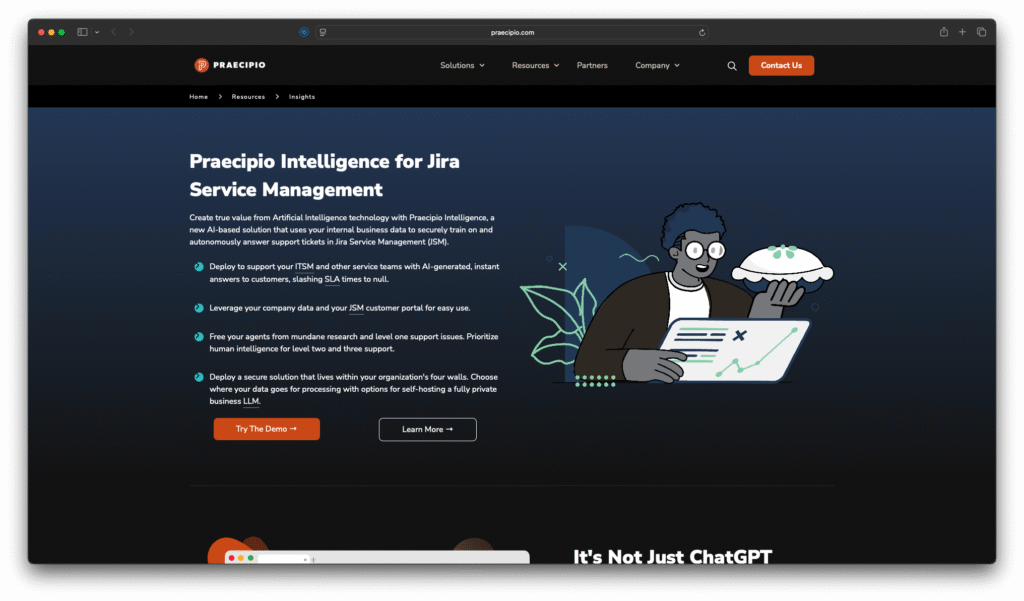
It’s a Little Burnt, But I Think We Can Save It…
We were off to a …crumbly… start, but I believed the offering had enormous potential and I’d become the de-facto project manager for PIE. Sadly, in the weeks that followed, a few critical things happened that killed the idea completely:
- We lost the client test-case’s interest. Our pitch hadn’t been coherent, so there was little surprise here. (I built a video demonstration you can see below for them).
- We got a demo stood up (eventually), but its capability fell far short of anything that should see the light of day. Making it public would do more harm than good. Our ability to deliver on this idea appeared to be vastly overstated by those who were trying to build it.
- We discovered the partner org most of our existing business comes from was near to rolling out their own native version of our solution (which they later did). With all the other troubles aside, our solution couldn’t exist as competition to the hands that fed us.
- My boss, the CMO, learned exactly how hard I needed to push the tiger-team in order to meet its intended goals. Defining the entire solution wasn’t meant to be my role in this. When she realized that I’d become the head-chef in this bakery, I got accolades for my tenacity and also told to shut it down.
What I learned
The next time I need to bring something from 0-1, I’ve now got a format for initial service development ideation.
- Define the solution: This is step one for a reason. If your sales people can’t explain what the thing is, solves, does, and doesn’t do, you’re not ready to put it in front of a client.
- Make sure it works: I ran into this first-hand with the PIE demo component. Bugs in a demo are one thing, but making something public that isn’t even functional yet should be cause for concern. Nobody’s interested in buying a dream.
- Don’t be in a hurry: Delivery milestones are important, but our technology was (at the time) on the bleeding edge of what LLMs were capable of. In that situation it’s important to have velocity, but make sure you nail the execution or you’ll be easily topped by the competition. If we’d started our tiger-team 6 months earlier, I think the PIE project would have resulted in a much more savoury outcome.